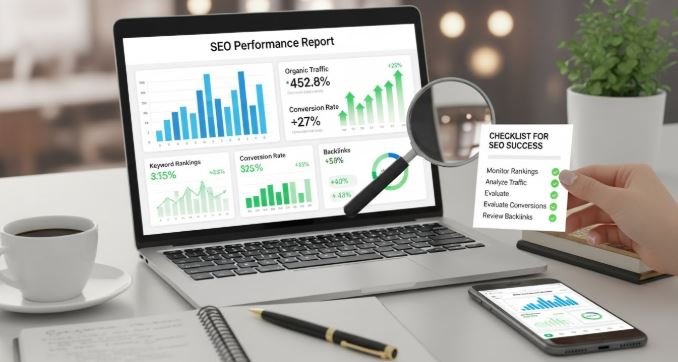
Search engine optimization is a long-term investment, not a switch you flip and instantly see results. That’s why one of the most common and most important questions businesses ask is how to check if SEO is working. Whether you’re handling SEO in-house, working with an agency, or just starting out, knowing what to measure, when to measure it, and how to interpret the data is critical.
This guide is written from an SEO practitioner’s perspective, using real-world benchmarks, Google’s own signals, and proven evaluation frameworks. By the end, you’ll know exactly how to tell if your SEO efforts are delivering meaningful results or if something needs to change.
Short Answer: How to Check If SEO Is Working
SEO is working if you see consistent improvements in organic traffic, keyword rankings, search visibility, user engagement, and conversions over time—not overnight, but steadily.
Google primarily evaluates SEO success through:
- Organic traffic growth
- Keyword ranking improvements
- Search impressions and click-through rate (CTR)
- Engagement signals (time on page, bounce rate)
- Conversions and revenue impact
In realistic terms:
- 30 days: Indexing, impressions, early keyword movement
- 60–90 days: Traffic lift on long-tail queries, ranking momentum
- 90–180 days: Stable rankings, consistent traffic, conversions
What Does It Actually Mean When SEO Is “Working”?
Many people confuse SEO activity with SEO results. Publishing content, building links, or fixing technical issues does not automatically mean SEO is working.
True SEO success means:
- Your pages are being discovered more often
- The right audience is landing on your site
- Users engage with your content
- SEO contributes to leads, sales, or revenue
Why SEO Success Is Not Just Rankings
Rankings matter, but they’re not the final goal. A #1 ranking that brings unqualified traffic or zero conversions is not successful SEO.
How Google Evaluates Progress Over Time
Google looks for patterns: improving relevance, authority, user satisfaction, and consistency—not sudden spikes.
Common Misconceptions
- “SEO should work in 2 weeks”
- “If rankings go up, SEO is successful”
- “Traffic alone proves SEO ROI”
Key Metrics That Show If SEO Is Working
Organic Traffic Growth
- Sessions, users, new users from organic search
- Brand vs non-brand traffic
- Quality indicators like engagement and conversions
Keyword Ranking Improvements
- Core commercial keywords
- Supporting and long-tail keywords
- Movement trends, not daily fluctuations
Search Visibility & Impressions
- Google Search Console impression growth
- CTR improvements
- Impressions rising before clicks (a positive early sign)
User Engagement Signals
- Bounce rate
- Average time on page
- Pages per session
- Scroll depth and interaction behavior
Conversions & Revenue From SEO
- Leads, signups, purchases
- Assisted conversions
- SEO ROI compared to paid channels
How to Check If SEO Is Working Using Google Tools
Google Analytics (GA4)
Use GA4 to:
- View organic traffic trends
- Measure engagement rate
- Track conversions from organic sessions
- Compare date ranges (month-over-month, year-over-year)
Google Search Console
Search Console shows how Google sees your site:
- Performance reports (queries, pages, devices)
- Impression vs click trends
- Identifying pages with high impressions but low CTR
How to Check If SEO Is Working Step by Step
Step 1: Establish a Clear SEO Baseline
Before judging results, document:
- Starting keyword rankings
- Baseline organic traffic
- Existing conversion rates
Step 2: Track Keyword Performance Correctly
- Track keywords by intent, not volume alone
- Separate local and national keywords
- Ensure content matches search intent
Step 3: Analyze Organic Traffic Trends
- Use month-over-month for momentum
- Year-over-year for true growth
- Account for seasonality and campaigns
Step 4: Evaluate Page-Level SEO Performance
- Identify top-performing pages
- Find pages with impressions but low clicks
- Spot declining pages early
Step 5: Measure Engagement & Behavioral Data
- Identify weak or thin content
- Improve dwell time and readability
- Align UX improvements with SEO goals
Step 6: Track SEO Conversions & Business Impact
- Set up GA4 events and conversions
- Track lead attribution
- Measure SEO’s revenue contribution
How Long Does It Take to See If SEO Is Working?
- 30 Days: Indexing improvements, impressions, crawl frequency
- 60–90 Days: Keyword movement, long-tail traffic growth
- 3–6 Months: Stable rankings, consistent traffic, conversions
- 6–12 Months: Authority growth, competitive keyword wins
Table 1: SEO Metrics That Indicate SEO Is Working
|
Metric |
What it Measure |
Why it Matters |
|---|---|---|
| Organic Traffic | User acquisition | Direct SEO growth signal |
| Keyword Rankings | SERP position | Visibility & competitiveness |
| Impressions | Search exposure | Demand and reach |
| CTR | Search appeal | Meta optimization |
| Conversions | Business impact | SEO ROI |
How to Check If SEO Is Working for Different SEO Types
Local SEO
- Google Business Profile insights
- Local pack rankings
- Calls, directions, and reviews
Ecommerce SEO
- Product and category traffic
- Revenue per organic session
- Conversion rate by landing page
B2B / Service SEO
- Lead quality
- Form submissions
- Assisted conversions across channels
Table 2: SEO Success Indicators by SEO Type
|
SEO Type |
Primary KPI |
Secondary KPI |
|---|---|---|
| Local SEO | Calls & directions | Reviews |
| Ecommerce SEO | Revenue | Product visibility |
| B2B SEO | Leads | Conversion rate |
Signs SEO Is NOT Working (And Why)
- Traffic with no conversions
- Rankings without impressions
- Sudden drops after algorithm updates
- High traffic but poor engagement
- Indexed pages with no visibility
Common Mistakes When Checking SEO Performance
- Tracking the wrong keywords
- Ignoring search intent
- Expecting instant results
- Relying on a single metric
- Comparing SEO timelines to paid ads
How to Check If SEO Is Working Without Paid Tools
- Google Analytics + Search Console only
- Manual SERP checks (incognito, neutral location)
- Trend-based performance analysis
- Content-level tracking
Table 3: Free vs Paid SEO Performance Tracking
|
Feature |
Free tools |
Paid tools |
|---|---|---|
| Traffic Data | GA4 | Advanced segmentation |
| Rankings | Limited | Daily tracking |
| Competitor Analysis | Minimal | In-depth insights |
| ROI Tracking | Basic | Advanced attribution |
How to Check If SEO Is Working for Individual Pages
How to Check If SEO Is Working for Blog Content
- Impression growth
- Long-tail keyword wins
- Internal linking improvements
How to Check If SEO Is Working for Service Pages
- Commercial keyword rankings
- Conversion tracking
- Local vs organic traffic split
FAQs: How to Check If SEO Is Working
How long does it take to check if SEO is working?
Typically 60–90 days for meaningful indicators, longer for competitive niches.
Can SEO be working without traffic growth?
Yes—impressions, rankings, and engagement can improve first.
What is the most important SEO success metric?
Conversions tied to organic traffic.
How do I know if my SEO agency is doing a good job?
They show clear reporting tied to traffic, rankings, and business outcomes.
How often should I check SEO performance?
Monthly for trends, quarterly for strategic decisions.
Can rankings go up but SEO still fail?
Yes, if traffic or conversions don’t improve.
Is SEO working if impressions increase but clicks don’t?
Often yes, CTR optimization may be needed.
How do Google updates affect SEO performance tracking?
They can cause short-term volatility; focus on long-term trends.
Final Conclusion: How to Check If SEO Is Working the Right Way
SEO success is multi-metric, not single-metric. Rankings, traffic, engagement, and conversions must all be evaluated together. The businesses that win with SEO are patient, data-driven, and focused on continuous improvement.
If you consistently measure the right signals, align content with intent, and improve user experience, SEO doesn’t just “work” it compounds. In order to make your SEO work in any form, visit Incline Solution now!



Leave a comment