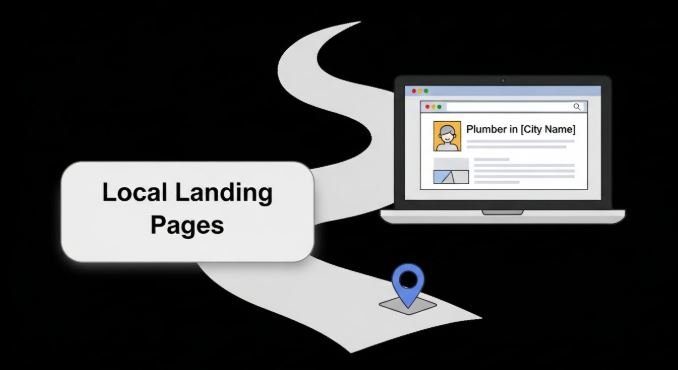
Local SEO success often comes down to timing. Publishing a new city page, updating business details, or earning a local backlink means little if Google doesn’t discover and index it quickly. That’s where rapid URL indexing enters the picture. In this guide, you’ll learn how local SEO agencies use rapid URL indexer tools strategically, when they matter, and how they fit into a professional, Google-compliant local SEO workflow.
Short Answer — How Do Local SEO Agencies Use Rapid URL Indexer?
Local SEO agencies use rapid URL indexer tools to speed up Google’s discovery and indexing of high-priority local URLs, such as new location pages, updated service content, Google Business Profile links, and local backlinks. These tools don’t directly improve rankings, but they reduce indexing delays, helping local SEO signals reach Google faster especially in competitive or time-sensitive markets where crawl efficiency and freshness matter.
What Is a Rapid URL Indexer and Why It Matters for Local SEO
Definition of a Rapid URL Indexer
A rapid URL indexer is a tool or service designed to prompt faster discovery of URLs by search engines. Instead of waiting for Google’s natural crawl cycle, agencies submit URLs through systems that generate crawl signals often via pinging, link discovery, or structured submission pathways.
These tools do not force indexing. Rather, they help Google find URLs sooner, which is a critical distinction for safe and sustainable SEO.
Why Indexing Speed Is Critical in Local SEO Campaigns
Local SEO is far more volatile than national SEO. Rankings can shift daily based on proximity, competition, and freshness. Indexing speed matters because:
- Local SERPs change rapidly, especially in service-based niches
- Google Business Profile updates need fast recognition
- Location-based content freshness influences trust and relevance
If Google hasn’t indexed your update, it can’t evaluate it no matter how strong the optimization is.
How Google Indexing Works for Local Pages
Google follows a four-stage process:
Crawl → Discover → Index → Rank
For local pages, this process is influenced by:
- Internal linking strength
- Site authority and crawl budget
- Local entity relevance
Unlike national pages, local URLs often receive less crawl priority, which is why agencies intervene with indexing support when timing matters.
How Do Local SEO Agencies Use Rapid URL Indexer in Real Campaigns
How Do Local SEO Agencies Use Rapid URL Indexer for New Local Pages
Agencies commonly use rapid URL indexing when launching:
- City pages (e.g., “Plumber in Austin”)
- Service-area pages
- Location-specific landing pages
These pages are often revenue-critical, so agencies ensure they’re discovered quickly rather than waiting weeks for natural crawling.
How Do Local SEO Agencies Use Rapid URL Indexer After On-Page Updates
Indexing tools are frequently used after:
- NAP corrections (Name, Address, Phone)
- Schema markup changes
- Content refreshes for accuracy and intent alignment
- Internal linking improvements
This ensures Google reassesses the page with the updated signals promptly.
How Do Local SEO Agencies Use Rapid URL Indexer for Google Business Profile Assets
Agencies may submit URLs linked from:
- Google Business Profile website fields
- Appointment and service URLs
- Local post links
This helps Google connect GBP activity with the correct landing pages faster.
How Do Local SEO Agencies Use Rapid URL Indexer for Local Link Indexing
Rapid URL indexers are also used to help Google discover:
- Local citations
- Niche edits
- Local PR backlinks
Indexing the link source helps Google recognize the authority signal sooner.
Step-by-Step Guide — How Local SEO Agencies Use Rapid URL Indexer
Step 1 — Identify URLs That Require Fast Indexing
Agencies prioritize:
- New money pages
- Recently updated high-impact URLs
- Fresh backlinks
Low-value or thin pages are excluded to avoid waste.
Step 2 — Prepare URLs for Indexing Success
Before submission, agencies ensure:
- URL is indexable (no noindex tags)
- Page loads properly
- Content quality meets Google standards
- Internal links point to the page
Indexing tools cannot fix technical SEO issues.
Step 3 — Submit URLs Through Rapid URL Indexer
Best practices include:
- Submitting in small, controlled batches
- Avoiding spammy anchor patterns
- Prioritizing quality over quantity
Professional agencies treat indexing as a precision task, not automation spam.
Step 4 — Monitor Indexing Status and SERP Appearance
Agencies verify results using:
- Google Search Console
site:search operator- Cached page checks
Indexing confirmation always precedes ranking evaluation.
Step 5 — Reinforce Indexing With Supporting Signals
To strengthen discovery, agencies add:
- Internal links from authoritative pages
- Local entity mentions
- User engagement signals
This reinforces legitimacy and crawl priority.
Comparison Table — Rapid URL Indexer vs Other Indexing Methods
Indexing Methods Compared
| Indexing Method | Speed | Reliability | Best Use Case | Risk Level | Local SEO Suitability |
|---|---|---|---|---|---|
| Rapid URL Indexer | Fast | Medium | New or updated priority URLs | Low (when used correctly) | High |
| Google Search Console | Moderate | High | Official URL submission | None | High |
| XML Sitemaps | Slow–Moderate | High | Large site discovery | None | Medium |
| Internal Linking | Moderate | Very High | Long-term crawl flow | None | Very High |
| Manual Crawling | Slow | Low | Low-authority sites | None | Low |
When Local SEO Agencies Should and Should Not Use Rapid URL Indexer
Ideal Use Cases
- Competitive local niches
- Time-sensitive promotions
- Reputation or data recovery campaigns
Situations Where Rapid URL Indexing Is Unnecessary
- High-authority sites with frequent crawling
- Minor, low-impact content edits
Risk Management and Best Practices
- Never mass-submit low-quality URLs
- Combine with strong on-page SEO
- Track indexing outcomes consistently
Common Mistakes Local SEO Agencies Make With Rapid URL Indexer
Over-Indexing Low-Quality URLs
Submitting thin or duplicate pages wastes crawl equity.
Ignoring Technical SEO Fundamentals
Indexing tools cannot override poor site health.
Treating Indexing as a Ranking Guarantee
Indexing enables evaluation it does not ensure rankings.
Lack of Tracking and Validation
Without monitoring, agencies can’t confirm effectiveness.
FAQs — How Do Local SEO Agencies Use Rapid URL Indexer
How fast does a rapid URL indexer work for local SEO pages?
Indexing can occur within hours to days, depending on site authority and page quality.
Is using a rapid URL indexer safe for local SEO?
Yes, when used selectively and responsibly.
Do rapid URL indexers improve local rankings directly?
No. They improve indexing speed, not rankings.
How often should local SEO agencies use rapid URL indexers?
Only for priority URLs not daily bulk submissions.
Can rapid URL indexers help index local backlinks?
Yes, they can help Google discover backlink sources faster.
Do rapid URL indexers replace Google Search Console?
No. They complement, not replace, GSC.
Are rapid URL indexers effective for multi-location businesses?
Yes, especially when launching or updating multiple location pages.
What metrics do agencies track after using rapid URL indexers?
Index status, crawl frequency, impressions, and ranking movement.
Final Verdict — How Do Local SEO Agencies Use Rapid URL Indexer Strategically
Local SEO agencies use rapid URL indexers as a supporting acceleration tool, not a shortcut. When combined with strong technical SEO, quality content, and local relevance signals, indexing tools help ensure that important changes are recognized by Google as quickly as possible. Used strategically, they improve efficiency, responsiveness, and competitive positioning in local search.



Leave a comment