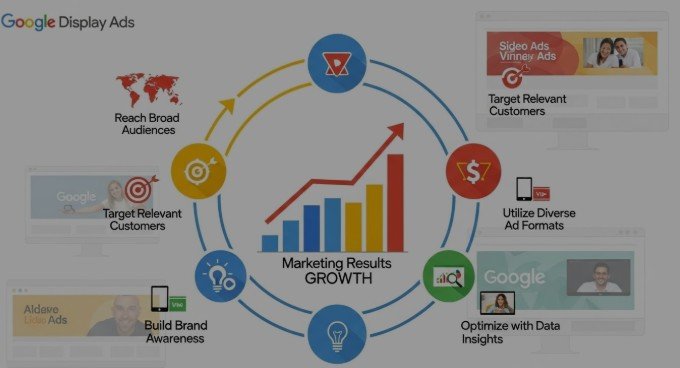
In a digital landscape where attention is fragmented across millions of websites, apps, and devices, advertisers face one core challenge: reaching the right audience at the right time at scale. This is exactly where Google Display Ads excel. Backed by Google’s massive data ecosystem and AI-driven optimization, display advertising has become one of the most powerful tools for driving awareness, engagement, and measurable growth.
This guide delivers the most complete, up-to-date, and practical explanation of how Google Display Ads grow marketing results for advertisers, covering strategy, mechanics, benefits, comparisons, and step-by-step execution.
Short Answer: How Does Google Display Ads Grow Marketing Results for Advertisers?
Google Display Ads grow marketing results for advertisers by delivering visually engaging ads to highly targeted audiences across millions of websites, apps, and platforms, using Google’s AI to optimize reach, relevance, and ROI. They help advertisers build brand awareness, nurture demand, retarget high-intent users, and convert prospects across every stage of the buyer journey often at a lower cost than many other paid channels.
What Are Google Display Ads? (Core Foundation)
Overview of the Google Display Network (GDN)
Google Display Ads run on the Google Display Network, a massive ecosystem that reaches over 90% of global internet users. This network includes:
- News websites and blogs
- Mobile apps
- YouTube (display placements)
- Gmail (Promotions and Social tabs)
Advertisers can place visual ads across this network to stay visible even when users aren’t actively searching.
Difference Between Display Network and Search Network
- Search Ads appear when users actively search for keywords
- Display Ads appear while users browse content, watch videos, or use apps
Search captures existing demand. Display creates and nurtures future demand.
How Google Display Ads Work
The Ad Auction Process
Google Display Ads operate on a real-time auction system. When a webpage loads:
- Google evaluates relevant advertisers
- Considers bid, ad quality, relevance, and expected performance
- Displays the best-performing ad for that user and context
Contextual vs Audience-Based Placement
- Contextual targeting shows ads based on page content (keywords, topics)
- Audience targeting shows ads based on user behavior, interests, or intent
Most high-performing campaigns use a hybrid approach.
Role of Google AI and Machine Learning
Google’s AI continuously analyzes:
- User behavior
- Device usage
- Historical performance
- Conversion signals
This allows automatic optimization that improves results over time without constant manual intervention.
How Does Google Display Ads Grow Marketing Results for Advertisers?
Google Display Ads grow marketing results by combining scale, precision, and automation in ways few platforms can match.
Key Ways Google Display Ads Drive Marketing Growth
- Massive global reach across millions of placements
- Cost-efficient impressions and clicks, especially for awareness campaigns
- Consistent brand visibility across multiple touchpoints
- Full-funnel impact, from awareness to conversion
Advertisers aren’t limited to one moment of intent they stay visible throughout the entire decision-making process.
How Does Google Display Ads Grow Marketing Results for Advertisers Using Advanced Targeting?
Google’s targeting capabilities are a major growth driver.
Audience targeting options include:
- In-market audiences (users actively researching products)
- Affinity audiences (long-term interests and habits)
- Custom intent audiences (based on specific behaviors and searches)
Contextual targeting includes:
- Keywords
- Topics
- Specific website placements
Demographic and geographic targeting further refine reach by age, gender, household income, and location ensuring ads reach only the most relevant users.
How Automation Improves Advertiser Performance
Automation is central to why display advertising performs so well.
Smart Bidding Strategies
- Maximize conversions
- Target CPA or ROAS
- Optimize bids in real time based on likelihood to convert
Responsive Display Ads
Advertisers upload headlines, descriptions, images, and logos. Google automatically tests combinations to find the best-performing versions.
Automated Optimization
Google adjusts:
- Placements
- Bids
- Creative combinations
All based on live performance data.
Benefits of Google Display Ads for Advertisers
Brand Awareness and Top-of-Funnel Growth
- Visual formats improve recall
- Repeated exposure builds familiarity and trust
Lead Generation and Conversions
- Remarketing brings back previous visitors
- Cross-device tracking ensures consistent messaging
Cost Control and Budget Flexibility
- Choose CPC or CPM bidding
- Scale budgets up or down easily
- Suitable for both small businesses and enterprises
Google Display Ads vs Other Advertising Channels
Comparison Table: Google Display Ads vs Search Ads vs Social Ads
Feature |
Google Display Ads |
Google Search Ads |
Social Media Ads |
|---|---|---|---|
| Audience Reach | Very High | Intent-based | Platform-specific |
| Visual Branding | Strong | Limited | Strong |
| Cost Efficiency | High | Medium–High | Medium |
| Funnel Stage | Awareness to Conversion | High-intent | Awareness & Engagement |
| Retargeting | Advanced | Limited | Advanced |
Step-by-Step Guide: How Advertisers Use Google Display Ads to Grow Marketing Results
Step 1: Define Campaign Goals
Decide whether the goal is:
- Brand awareness
- Website traffic
- Lead generation
- Sales
Step 2: Choose the Right Display Campaign Type
- Standard Display for control
- Smart Display for automation
- Discovery campaigns for high-visual placements
Step 3: Build High-Performing Audiences
- Custom segments
- Remarketing lists
- Similar (lookalike) audiences
Step 4: Create Optimized Display Ad Creatives
- High-quality images
- Clear value propositions
- Strong calls to action
Step 5: Set Budget, Bidding, and Placements
- Select smart bidding
- Apply frequency caps
- Exclude low-quality placements
Step 6: Track, Measure, and Optimize Results
- Set up conversion tracking
- Monitor CTR, CPA, ROAS
- Continuously test audiences and creatives
Common Mistakes Advertisers Make with Google Display Ads
- Targeting audiences too broadly
- Using weak or generic creatives
- Ignoring remarketing opportunities
- Not optimizing for conversions
- Failing to exclude poor placements
Avoiding these mistakes alone can dramatically improve ROI.
Who Should Use Google Display Ads?
Google Display Ads are ideal for:
- Small businesses building visibility
- E-commerce brands driving repeat sales
- Local service providers staying top-of-mind
- SaaS companies nurturing long sales cycles
- Enterprise brands scaling globally
FAQs: How Does Google Display Ads Grow Marketing Results for Advertisers?
How does Google Display Ads grow marketing results for advertisers compared to search ads?
Display ads build awareness and demand before users search, while search captures existing intent.
Are Google Display Ads effective for small businesses?
Yes. They offer flexible budgets and cost-efficient reach.
How much budget is required for Google Display Ads?
Campaigns can start with modest daily budgets and scale gradually.
What types of businesses benefit most from Google Display Ads?
Any business with a defined audience and measurable goals.
How long does it take to see results from Google Display Ads?
Awareness results appear quickly; conversion optimization improves over weeks.
Can Google Display Ads increase conversions or only brand awareness?
They can drive both, especially with remarketing and smart bidding.
How does remarketing work in Google Display Ads?
Ads target users who previously interacted with your site or app.
Are Google Display Ads worth it in 2025?
Yes—automation, AI targeting, and cross-device reach make them more powerful than ever.
Final Verdict: Why Google Display Ads Are Essential for Advertiser Growth
Google Display Ads are not just about visibility they’re about sustained, scalable growth. By combining massive reach, advanced targeting, AI-driven automation, and full-funnel impact, they help advertisers connect with audiences before, during, and after purchase decisions.
For brands serious about long-term marketing performance, Google Display Ads are no longer optional they’re foundational. For proper guidance of your ads you should definitely connect with Incline Solution without any further delay.



Leave a comment