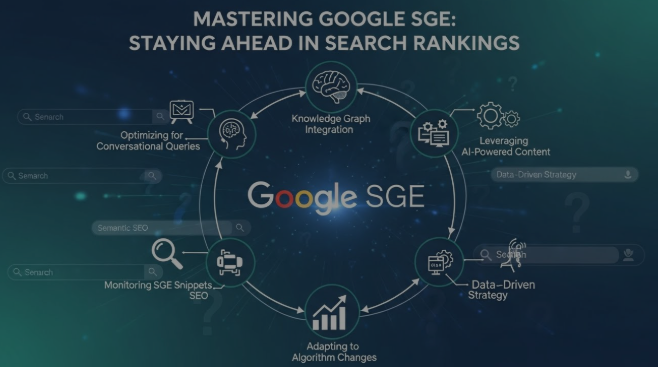
Google’s Search Generative Experience (SGE) is revolutionizing how search works. Traditional SEO practices keywords, meta tags, backlinks are no longer enough. SGE introduces AI-generated answer boxes alongside organic listings, meaning your content must not only be relevant but structured, authoritative, and semantically optimized to stay ahead.
This guide delivers everything you need to dominate search rankings in the age of Google SGE, including actionable steps, strategic insights, and long-term competitive tactics.
Short Answer: How to Stay Ahead in Search Rankings with Google SGE
To stay ahead in Google SGE, you need to create AI-optimized, semantically-rich content, leverage structured data and schema, demonstrate strong E-E-A-T signals, and continuously track and adapt to SGE-specific engagement metrics. Simply optimizing for traditional SEO is no longer enough your content must satisfy AI-driven answers and user expectations simultaneously.
Understanding Google SGE (Search Generative Experience)
What is Google SGE?
Google SGE uses AI to generate concise, contextually-aware answers above or alongside traditional search results. Instead of just showing 10 blue links, SGE can summarize, synthesize, and provide step-by-step solutions directly in the SERP.
Key Differences from Traditional Search:
- Hybrid AI + organic layout
- Emphasis on context and semantic understanding
- Increased visibility for authoritative, structured content
Why SGE Changes SEO Forever
- Users may click less on traditional listings, trusting AI answers.
- Content must answer multiple related questions in one page.
- Authority and trust signals are more important than ever, as Google’s AI favors credible sources.
How Search Rankings Are Affected by Google SGE
Organic Listings vs AI-Generated Answer Boxes
AI-generated results often reduce clicks for weaker content. To stay ahead, your content must feed AI answers while keeping the user engaged.
The Importance of Authority in SGE-Influenced SERPs
SGE favors trusted authors, established brands, and domain authority. Thin content or unverified expertise is unlikely to be selected.
Content Format & User Engagement Signals
Content must be structured with:
- Step-by-step instructions
- Lists and tables
- Clear headings (H2, H3, etc.)
This ensures AI systems can interpret and surface your content accurately.
Key Strategies to Stay Ahead in Search Rankings with Google SGE
1. Create AI-Optimized Content
- Focus on semantic keywords, not just exact-match phrases
- Anticipate related questions users might ask
- Use structured, scannable formats
2. Build Strong E-E-A-T Signals
- Demonstrate experience and expertise in your niche
- Include citations, references, or credentials
- Maintain transparency and trustworthiness
3. Leverage Schema and Structured Data
- FAQ schema, How-to schema, Article schema
- Helps Google AI understand your content
- Increases visibility in AI answer boxes
4. Target Search Intent Smarter
- Analyze queries for intent type: informational, commercial, transactional
- Optimize content accordingly
- Include hybrid coverage where users expect multi-layered answers
5. Monitor SGE Performance Metrics
- CTR and impressions from Google Search Console
- Engagement signals (dwell time, bounce rate)
- Knowledge panel and snippet appearances
6. Optimize for Featured Snippets and AI Answer Boxes
- Provide short, precise answers at the top of content
- Include steps, bullet points, and tables
- Use headings that match user questions
How to Stay Ahead in Search Rankings with Google SGE
Step 1: Audit Your Existing Content for SGE Opportunities
Identify pages that can be expanded for semantic depth, FAQs, and structured data.
Step 2: Map Keywords to AI-Driven SERPs
Determine which queries generate AI answers and optimize content to satisfy them.
Step 3: Upgrade Content with Semantic Depth
Add related topics, examples, charts, and actionable steps.
Step 4: Implement Schema and Structured Data
Add FAQ, How-to, and Article schema for Google AI to parse content effectively.
Step 5: Build Backlinks and Authority Mentions
Secure authoritative backlinks and mentions from trusted sources.
Step 6: Track Performance and Iterate Continuously
Regularly check impressions, clicks, and AI snippet appearances, then refine content.
Traditional SEO vs SGE-Optimized SEO
| Factor | Traditional SEO | SGE-Optimized SEO | Why It Matters |
|---|---|---|---|
| Keyword focus | Exact-match | Semantic / intent | SGE interprets queries contextually |
| Content depth | Medium | Deep & structured | AI prefers detailed answers |
| Formatting | Text-heavy | Step-by-step, bullet, tables | AI highlights structured info |
| Authority signals | Optional | Critical | Trust drives AI selections |
| Featured snippets | Important | Mandatory | AI often uses snippet content |
Common Mistakes When Trying to Rank in SGE
- Ignoring semantic relationships between topics
- Creating shallow content
- Skipping schema or structured data
- Weak authority and backlinks
- Relying solely on traditional SEO tactics
Frequently Asked Questions (FAQs)
What is Google SGE and how does it affect rankings?
SGE is Google’s AI-driven search feature that changes how content is surfaced, favoring semantic and authoritative content.
Can traditional SEO still work with SGE?
Yes, but it must be augmented with semantic depth, structured data, and E-E-A-T signals.
How do I optimize content for AI-generated results?
Use semantic keywords, structured content, step-by-step guides, and schema markup.
Does structured data help in SGE rankings?
Yes, it allows AI to understand and present your content in answer boxes.
How do I measure my performance in SGE?
Track impressions, CTR, snippet placements, and engagement in Search Console and analytics tools.
Will backlinks still matter with SGE?
Yes, they signal authority and trust, which AI considers for answer selection.
Conclusion: Staying Ahead in Search Rankings with Google SGE
Google SGE has shifted the SEO landscape. To stay ahead contact Incline Solution and hire services before its too late:
- Create AI-optimized, semantically rich content
- Leverage structured data and schema
- Demonstrate authority and trust
- Monitor performance and iterate continuously
The future belongs to content that answers questions better than anyone else, satisfies AI interpretations, and earns user trust. Start today those who adapt will dominate the SERPs.



Leave a comment