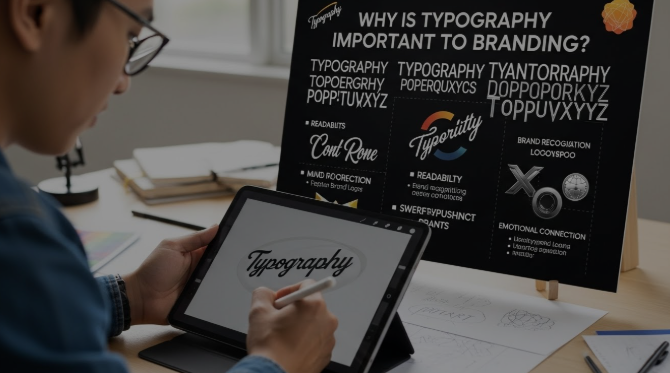
Typography is one of the most powerful, yet underestimated, elements of branding. Before a customer reads a single word, typography silently communicates trust, personality, and professionalism. That’s exactly why the question “why is typography important to branding?” matters more than most businesses realize.
In this guide, you’ll learn how typography shapes brand perception, drives recognition, and directly influences customer behavior.
Short Answer — Why Is Typography Important to Branding?
Typography is important to branding because it defines how a brand looks, feels, and communicates. The right typography builds trust, creates consistency, reinforces brand personality, and improves recognition across all touchpoints.
What Is Typography in Branding? (Core Explanation)
Typography in branding refers to the intentional selection and use of typefaces to represent a brand’s identity. It includes font style, size, spacing, hierarchy, and consistency across platforms.
Typography is not just decoration it’s a functional branding tool that affects:
- Readability
- Emotional response
- Brand memorability
- User experience
Typography vs Logo Design — What’s the Difference?
A logo is a single visual asset. Typography, on the other hand, appears everywhere:
- Website content
- Social media posts
- Packaging
- Advertisements
- Emails
- Brand documents
This is why typography often has a bigger branding impact than the logo itself.
Why Is Typography Important to Branding and Brand Perception?
Typography creates first impressions often within milliseconds.
Different typefaces trigger different emotional responses:
- Clean fonts feel modern and trustworthy
- Serif fonts feel established and authoritative
- Script fonts feel elegant or personal
How Typography Shapes Brand Personality
Typography instantly signals what kind of brand you are:
- Serif fonts: Traditional, reliable, premium
- Sans-serif fonts: Modern, clean, tech-focused
- Script fonts: Creative, emotional, luxury
- Display fonts: Bold, playful, attention-grabbing
This psychological influence is why typography is central to branding strategy.
How Typography Builds Brand Recognition and Consistency
Consistent typography helps customers recognize your brand without seeing your logo.
When typography is used consistently:
- Your brand becomes visually memorable
- Content feels cohesive and professional
- Trust increases over time
Typography acts as a visual signature a silent brand identifier across all channels.
Why Is Typography Important to Branding for Marketing and Conversion?
Typography directly impacts:
- Readability
- Engagement
- Conversion rates
Poor typography causes users to leave. Good typography:
- Improves content scanning
- Keeps users engaged longer
- Increases clarity and action-taking
In short, typography affects not just how a brand looks but how it performs.
Guide to Choosing Typography for Branding
1. Define Your Brand Personality
Is your brand formal, friendly, bold, or minimalist?
2. Understand Your Target Audience
Typography must resonate with who you’re speaking to.
3. Choose Primary and Secondary Fonts
Limit to 2–3 fonts maximum.
4. Test Readability Across Platforms
Web, mobile, print all must work seamlessly.
5. Create Typography Usage Rules
Define headings, body text, spacing, and hierarchy.
6. Apply Typography Consistently
Consistency builds recognition and trust.
Typography Branding Comparison Table
| Typography Style | Brand Feel | Best For | Examples |
|---|---|---|---|
| Serif | Classic, trusted | Finance, law, luxury | Times, Garamond |
| Sans-serif | Modern, clean | Tech, startups | Helvetica, Inter |
| Script | Elegant, personal | Fashion, beauty | Pacifico |
| Display | Bold, expressive | Creative brands | Bebas Neue |
Common Typography Mistakes That Hurt Branding
- Using too many fonts
- Choosing trendy fonts without strategy
- Ignoring readability
- Inconsistent font usage
- Poor spacing and hierarchy
These mistakes weaken brand credibility and confuse users.
FAQs — Typography and Branding
Why is typography important to branding consistency?
Because consistent typography reinforces recognition and trust across all brand touchpoints.
Can typography alone represent a brand?
Yes. Many brands are recognizable purely by their typography.
How many fonts should a brand use?
Ideally 2–3 fonts for clarity and consistency.
Does typography affect brand trust?
Absolutely. Poor typography lowers perceived professionalism.
Is custom typography worth it for small brands?
For growing brands, yes it increases uniqueness and recognition.
How often should brands update typography?
Only when brand positioning changes or usability issues arise.
Final Thoughts — Why Is Typography Important to Branding?
Typography is not just a design choice it’s a strategic branding asset. It shapes perception, strengthens identity, builds trust, and improves performance across marketing and communication. Visit Incline Solution for proper branding of your business.
Brands that treat typography strategically don’t just look better they feel stronger, clearer, and more credible.



Leave a comment